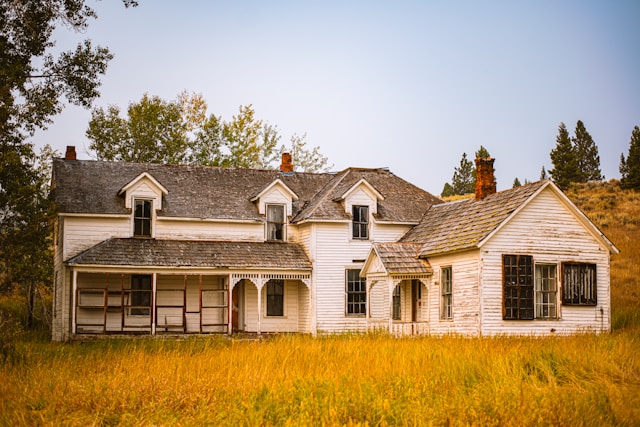
Older houses have a character that newer properties often struggle to match. High ceilings, bay windows, solid timber doors, original fireplaces and generous room sizes can make them very appealing, especially to buyers who want something with a bit more personality than a modern development.
They can also be remarkably durable. Plenty of Victorian, Edwardian and early twentieth-century homes have already stood for more than a hundred years and continue to perform perfectly well.
The difficulty is that age changes the way you should look at a property.
A small crack in a ten-year-old house may mean something different from the same crack in a Victorian terrace. A slightly uneven floor may be completely normal in one property but more significant in another. Old roofs, altered chimneys, ageing drainage and years of previous repairs all form part of the picture.
That does not mean an older house is a risky purchase. It simply means the condition deserves to be understood properly before you commit.
Start With the Outside Before You Fall in Love With the Inside
It is very easy to be won over by the interior of an older house. A beautifully restored hallway or original fireplace can make a strong first impression, but the outside of the building often tells you more about how well the property has actually been maintained.
Take a few minutes to look at the brickwork, render, roofline and gutters before you go inside. You are not trying to carry out your own survey. You are simply looking for obvious signs that something may need closer attention.
Cracked render, missing pointing, vegetation growing from gutters or staining down external walls can all suggest maintenance has been delayed. None of these issues is automatically serious, but they may indicate that certain parts of the property have not received much attention for some time.
The condition of neighbouring properties can also be useful. If several houses in the same terrace show similar roof details, chimney alterations or cracking patterns, that can give you some context about the age and construction of the street.
Uneven Floors Are Common, but They Still Tell a Story
Many older houses do not have perfectly level floors.
Over time, timber floor structures settle, joists move slightly and buildings experience normal movement. In a property that is more than a hundred years old, some unevenness is often unsurprising.
What matters is how noticeable it is and whether there are other signs of movement nearby.
If a floor slopes gently across a room but the walls, ceilings and doors appear stable, it may simply reflect the age of the building. If the floor drops sharply towards one corner and there are also large cracks or distorted door frames, the situation may deserve more investigation.
This is one of the reasons why a professional survey is useful. The surveyor can consider several signs together rather than judging one feature in isolation.
Old Chimneys Can Create New Problems
Chimney breasts are a common feature in older houses, but many properties have been altered over the years.
Some homeowners remove a chimney breast to create more floor space. Others remove it from one level but leave the remaining section above. This can be perfectly acceptable when the structure has been properly supported.
The issue is that buyers often cannot tell what has happened.
A fireplace may have been removed and the wall neatly plastered. From inside the room, everything can look completely normal.
If you notice that a chimney is visible externally but there is no obvious chimney breast inside, it is worth mentioning this during the survey. The surveyor can consider whether there are visible signs of alteration and whether further information may be useful.
Older houses frequently contain several generations of changes, and these alterations are often just as important as the original structure.
Damp Is More Complicated Than It Looks
Damp is one of the main things buyers worry about in older properties, but the subject is often oversimplified.
A damp patch can have several possible causes. It may be linked to leaking rainwater goods, condensation, poor ventilation, failed external finishes or ground levels around the building.
In some older homes, the way the walls were originally designed to manage moisture is also relevant.
This means the answer is not always as simple as seeing a patch and assuming there is one particular type of damp.
The location of the moisture, the condition of the outside walls and the overall construction of the property all help provide context.
If you notice a musty smell, staining near skirting boards or peeling decoration, it is worth raising it. These signs do not automatically point to a major problem, but they should not simply be ignored either.
Look Carefully Around Bay Windows
Bay windows are one of the most attractive features of many older homes, but they can also be an area where movement and deterioration become visible.
Cracks around the corners of a bay, gaps around window frames or signs of water penetration may all deserve attention.
Again, minor cracking is common in older houses and is not automatically serious.
The important thing is whether the cracking appears isolated or whether it forms part of a wider pattern.
A surveyor will consider the size and position of cracks along with other visible evidence before deciding whether the issue appears routine or whether further investigation may be needed.
The Roof May Be Older Than You Think
A roof can look reasonable from the street even when it is approaching the end of its useful life.
This is particularly relevant in older properties where the covering may have been repaired many times rather than fully replaced.
A few replacement tiles do not necessarily tell you much. What matters is the general condition of the roof, the age of the materials and whether there are signs of ongoing water penetration.
Chimney stacks, flashing and valleys can also require attention over time.
If you are buying an older or heavily altered property, a more detailed Building Survey may be useful because it provides a broader assessment of the building’s visible condition.
Extensions Can Behave Differently From the Original House
Many older homes have been extended at some point.
A kitchen extension, rear addition or converted side return can significantly improve the property, but it also introduces a newer structure alongside the original building.
Different parts of the house may therefore move slightly differently over time.
This can sometimes lead to cracking where the extension joins the older structure.
Small cracks at these junctions are not unusual and may be completely harmless. The question is whether the cracking is stable and consistent with normal movement or whether it suggests something more significant.
If you are looking at a property that has been extended, our guide on buying a house with an extension may help you understand what to look for.
Do Not Assume Renovation Means Everything Has Been Renewed
A common misunderstanding with older houses is the phrase “fully renovated.”
That wording sounds comprehensive, but it can mean very different things depending on the property.
One house may have had a complete refurbishment involving the roof, electrics, plumbing, insulation and structural repairs.
Another may simply have had a new kitchen, fresh paint and new flooring.
Both could be described as renovated.
This is why buyers should separate cosmetic improvements from the underlying condition of the building.
A beautifully finished interior is a positive thing, but it does not necessarily tell you whether older parts of the property have been repaired or replaced.
If the house has recently been refurbished, you may find our guide on whether you still need a survey on a renovated property useful.
Windows Can Reveal More Than You Expect
Older properties may contain a mixture of original windows, replacements and later alterations.
Even where windows have been replaced, the surrounding walls and openings may still show signs of movement or previous repairs.
Look for gaps around frames, staining beneath windows and condensation between panes.
Timber windows may also require more regular maintenance than modern alternatives.
Again, none of these issues necessarily changes whether the property is worth buying. They simply help you understand what maintenance may be required.
The Survey Is About Understanding the Whole Building
This is probably the most important point.
A survey is not just about identifying one dramatic defect.
It is about looking at how the property works as a whole.
Older homes usually contain a mixture of original construction, old repairs, later alterations and more recent upgrades. A good survey helps you understand how those pieces fit together.
The surveyor may identify several minor issues that are completely manageable.
They may also recommend further investigation of something more important.
Either way, you have more information before you become legally committed to the purchase.
If the report does identify something significant, our guide on what to do when your property survey finds problems explains the next steps.
Should You Choose a Level 2 or Level 3 Survey?
The age of the property is one factor, but it is not the only one.
A well-maintained older home with relatively straightforward construction may not always require the most detailed survey available.
On the other hand, an older property that has been heavily extended, altered or shows visible signs of defects may benefit from a Level 3 survey.
The decision should be based on the individual building.
Our guide comparing Level 2 and Level 3 surveys explains the differences in more detail.
Older Does Not Mean Worse
One of the biggest mistakes buyers can make is assuming that an old house must automatically be full of problems.
That is simply not true.
Many older properties are extremely well built and have already proved their durability over decades.
The important thing is maintenance.
A hundred-year-old house that has been carefully looked after may be a much better purchase than a much newer property that has been neglected.
Age simply means you need to understand what you are buying.
Take your time during the viewing. Look beyond the decoration. Ask questions about previous alterations and repairs. Pay attention to the roof, external walls, drainage and visible signs of movement.
Then use the survey to fill in the gaps.
A good survey should not make you afraid of an older property. It should give you a clearer picture of its condition, what needs attention and what can probably wait.
That knowledge makes it much easier to decide whether the house is right for you.
If you are considering an older property and want an independent assessment before buying, you can find surveyors near you and compare suitable professionals in your area.