
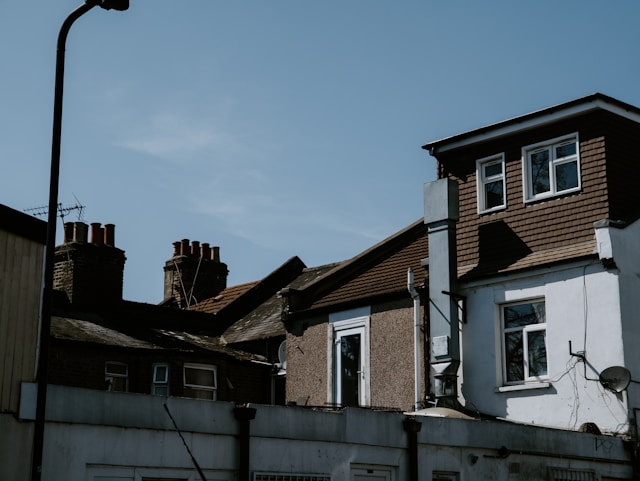
An extension is often one of the reasons people fall in love with a house.
The original two-bedroom terrace now has a big kitchen overlooking the garden. A modest semi has gained a utility room and extra living space. Another property has been extended at the side to create a fourth bedroom.
From a buyer’s point of view, somebody else has already dealt with the planning, builders, dust and disruption.
You get the extra space without having to build it yourself.
That can be a real advantage.
But an extension also means that somebody has made substantial changes to the original building, and it is worth understanding what you are buying before you commit.
The age of the extension is a useful place to start.
Some houses have extensions that were completed only a few years ago. Others have rear additions that may be forty or fifty years old.
That difference matters.
A modern extension may have been constructed to relatively recent standards but could still suffer from poor workmanship.
An older extension may have performed perfectly well for decades but could now need maintenance to its roof, windows or walls.
There are also extensions that have been altered more than once.
You occasionally see houses where an older small rear addition has later been joined to a much larger kitchen extension. From inside, everything may look like one room.
From a building point of view, there can be several different structures meeting each other.
This is why it is useful to look beyond the floor space.
Start with the point where the extension joins the original property.
Junctions are often where problems show themselves.
There may be changes in roof level, wall construction and foundations. Rainwater needs to be directed properly where old and new roofs meet.
Small cracks around these areas are not necessarily a sign of serious trouble.
Buildings move slightly over time, and materials expand and contract.
What matters is the type of cracking, whether it appears active and whether there are other signs of movement nearby.
A surveyor will consider the pattern rather than simply seeing a crack and declaring a structural problem.
Doors that suddenly do not close properly, stepped cracking through brickwork and noticeable distortion can all provide additional clues.
Sometimes an extension settles slightly after construction and then remains stable.
Sometimes movement needs further investigation.
The purpose of the survey is to help distinguish between the two.
Flat roofs are common on extensions and deserve particular attention.
There is nothing inherently wrong with a flat roof when it has been correctly designed and maintained.
The problem is that buyers often cannot see much of it.
You might have a perfect-looking ceiling underneath while the roof covering above is becoming worn.
Water can also collect if falls are poor or outlets become blocked.
A surveyor will normally inspect what is accessible and look for signs of ageing, ponding, damaged coverings and previous leaks.
Inside, staining or cracking around the junction between the house and extension may provide additional clues.
If the extension has a pitched tiled roof, there are still things to consider.
The flashing where the roof meets the original wall needs to keep water out. Gutters must carry rainwater away effectively. Tiles should be secure and correctly positioned.
None of this is particularly exciting compared with looking at the new kitchen, but it can be much more important financially.
The opening between the original house and the extension is another area buyers sometimes overlook.
A modern open-plan kitchen may have required most of the original rear wall to be removed.
That wall could previously have supported the floors or structure above it.
Removing it would normally require suitable structural support.
You will probably not be able to see the beam because it is boxed in and plastered.
A surveyor cannot normally open the ceiling to check hidden work during a standard survey either.
However, they can look for visible signs that may indicate movement or problems around the opening.
Your solicitor should separately investigate whether appropriate approvals and documents are available.
This is an important distinction.
The surveyor looks at the physical building.
Your solicitor deals with legal and documentary matters.
If the extension was built many years ago and documents are missing, your solicitor can advise you on what that means for the purchase.
Do not rely on the survey alone for this.
Drainage is another issue that becomes relevant when a property has been extended.
An extension may have been built over, beside or around existing drainage routes.
Rainwater from the new roof also needs somewhere appropriate to go.
Poor drainage can cause anything from overflowing gutters to standing water around the building.
Take a look at the garden after heavy rain if you happen to visit during wet weather.
Is water collecting against the extension?
Do the gutters overflow?
Does the patio slope towards the building rather than away from it?
These observations do not automatically mean there is a serious defect, but they are worth mentioning to the surveyor.
Ground levels deserve attention too.
Patios are sometimes raised during landscaping work.
If the external ground ends up too high against the wall, it can contribute to moisture problems inside.
Again, the attractive part of the extension may be the expensive bifold doors.
The less interesting strip of paving immediately outside them can tell you just as much about how well the work was planned.
Insulation and comfort are worth thinking about as well.
Some older extensions can feel noticeably colder than the original house.
Large areas of glazing may look fantastic but can affect heat loss and summer temperatures.
A conservatory-style addition that has been converted into a more permanent room may deserve closer consideration, particularly if the construction is unusual.
Spend time in the extension rather than simply walking through it.
Does it feel unusually cold?
Is there condensation around windows?
Is there a musty smell?
Can you see staining in corners?
If possible, view the property at different times of day.
A bright extension facing the garden can feel completely different on a cold winter morning compared with a sunny afternoon.
Age matters here too.
A 1970s extension may not offer the same thermal performance as something built recently.
That does not make it defective.
It just means you need realistic expectations about heating and possible upgrades.
The same principle applies to older windows and doors.
Large doors leading onto the garden can be expensive to replace if they are worn or poorly installed.
Check whether they open smoothly and whether there is obvious staining or damage around the frames.
If an extension looks recently built, buyers sometimes assume every part of it must therefore be in excellent condition.
Not necessarily.
Poor workmanship can appear very quickly.
You may see cracked finishes, badly fitted doors, loose tiles, inadequate sealing or uneven floors even in relatively new work.
At the other end of the scale, a well-built thirty-year-old extension may still be performing extremely well.
Age is useful information, but condition is more important.
The type of survey you choose should reflect the property as a whole.
If the house is otherwise conventional and the extension is straightforward, a HomeBuyer Survey may give you enough information.
If the property has been substantially altered, contains several extensions, shows cracking or is an older building with complicated changes, a detailed Building Survey may be more appropriate.
Ask the surveyor before booking if you are unsure.
Mention the extension specifically.
Estate-agent listings normally include photographs and floor plans, so sending the listing to the surveyor can make the conversation much easier.
After the survey, pay particular attention to comments about the extension rather than only reading the highest condition ratings.
Sometimes there may be several smaller issues that matter when considered together.
For example, the report might note cracking at the junction, poor rainwater drainage and signs of damp near the same corner.
Individually, none of these observations tells you the whole story.
Together, they may justify further investigation.
If the report does identify a significant problem, do not immediately assume the purchase is finished.
Talk to the surveyor.
Ask how serious they believe it is.
Find out whether they recommend a structural engineer, drainage specialist or another professional.
Where substantial repairs may be needed, obtain quotations before exchange.
The purpose is to turn uncertainty into something you can make a decision about.
If you have already received a report and are wondering what happens next, the Surveys Near Me guide on what to do when your property survey finds problems covers that situation in more detail.
Most extensions are not a reason to avoid a property.
In many cases they are exactly what make the house work for modern family life.
The point is simply to understand how the extra space was added and whether the work is holding up well.
When viewing a house, it is easy to focus on how useful the extension will be.
Will the dining table fit?
Can the children use one end as a play area?
Will the doors open onto the garden in summer?
Those are perfectly reasonable questions.
Before buying, add a few more.
How old is the extension?
Has it ever leaked?
Are there cracks around the junction with the original house?
What is the roof condition?
What paperwork is available?
Has any further alteration been carried out since it was built?
The answers can tell you a great deal.
And where they do not, a survey can help fill in the gaps.
You can search for surveyors near the property and compare suitable professionals before instructing one. If timing is important because your purchase is already moving quickly, the site’s guide to how long a property survey takes is also worth checking.