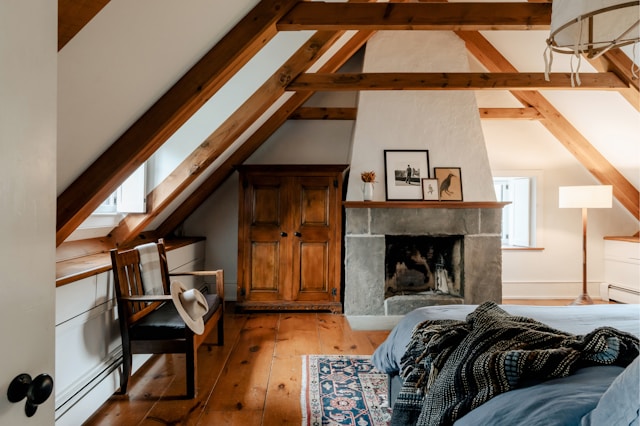
A loft conversion can be one of the best features in a house. It can turn what was once unused roof space into a proper bedroom, a home office, a children’s room or even a small bathroom. For buyers, that extra space can make a property feel much more practical, especially in areas where moving to a larger home would mean spending considerably more.
At first glance, a converted loft often looks like a major advantage. The difficult work has already been done, the scaffolding has long gone and you can simply move in and enjoy the additional room.
That is the ideal situation.
But a loft conversion is not just a bit of plasterboard, flooring and decoration added to an attic. Depending on the property, it may have involved altering the roof structure, installing steel beams, adding new floor joists, changing the staircase, fitting roof windows or dormers and making significant changes to insulation, ventilation and fire safety.
Most loft conversions are perfectly serviceable. The issue for a buyer is simply that you usually do not know how the work was carried out until someone takes a closer look.
That is why the conversion should form part of your overall assessment of the property rather than simply being treated as an extra bedroom.
Find Out When the Loft Was Converted
One of the easiest places to start is by asking the seller or estate agent when the conversion was completed.
Sometimes the answer is straightforward. The seller may have carried out the work themselves a few years earlier and still have all the paperwork. In other cases, the conversion may pre-date the current owner and nobody is completely sure when it was done.
The age of the conversion can give useful context.
A fairly recent conversion may have been completed under modern building standards, although this does not automatically mean the workmanship is perfect. An older conversion may have been built under different requirements and could have undergone several repairs or alterations since it was first created.
There are also plenty of houses where the loft looks new because it has recently been decorated, while the actual structural work underneath is decades old.
That distinction matters.
Fresh paint, new flooring and fitted wardrobes can make a room look impressive during a viewing, but they tell you very little about what is happening behind the walls or below the floor.
Do Not Be Distracted by the Finish
Loft rooms are often some of the nicest-looking rooms in a house. They usually have good natural light, clean finishes and a feeling of separation from the rest of the property.
It is easy to walk into the room, think how well it would work as a bedroom and move straight on.
Try to slow down and look at the less attractive details as well.
Check around roof windows for staining or signs that an area has recently been painted. Look at the junctions between walls and sloping ceilings. Notice whether cracks appear around doors or where the staircase enters the loft.
It is also worth looking at the rooms directly below the conversion once you come back downstairs.
A crack in a ceiling does not necessarily mean there is a structural problem. Older houses move, plaster cracks and minor defects are extremely common.
What matters is the overall pattern.
If several doors no longer close properly, a ceiling looks noticeably uneven and there are cracks in similar locations, that is something worth pointing out when arranging your survey.
For altered or older properties, a more detailed Building Survey may sometimes be more suitable than a basic inspection.
Think About What Had to Change Structurally
This is the part that buyers understandably find difficult because much of the structure is hidden.
A traditional roof was originally built to work in a particular way. Rafters, purlins, struts and ceiling joists all have jobs to do. When the loft becomes living space, the structure usually needs to be adapted.
For example, the original ceiling joists are not normally intended to act as the floor of a bedroom. New floor construction may therefore be needed.
Supports that once ran through the roof space may also have to be moved or replaced to create enough usable room.
This is where steel beams and other structural elements often come into the picture.
When the work has been properly designed, there is usually no reason to be concerned.
The problems tend to arise where changes have been made simply to create more space without enough consideration for how the roof or floors are being supported.
A buyer is unlikely to be able to judge this during a normal viewing.
A surveyor, however, will look at visible evidence such as distortion, unusual cracking, sagging and the general way the building has been altered.
Look at the Loft From the Outside as Well
Once buyers have seen the new room inside, they often forget that the outside of the conversion matters just as much.
Dormer loft conversions are a good example.
A dormer can create a huge amount of usable space, but it also introduces new junctions into the roof. The sides, roof covering, window surrounds and flashing all need to keep water out.
Over time, these areas can become vulnerable if materials have deteriorated or the detailing was poor from the beginning.
From outside, have a look at the general shape of the roof.
You do not need to understand roofing to notice something that looks obviously uneven.
Look for damaged tiles, loose coverings, staining below gutters or poorly finished edges around the dormer.
Even something as simple as rainwater repeatedly running down the face of an external wall can eventually become a maintenance issue.
The point is not to diagnose the problem yourself. It is simply to notice what deserves closer attention.
Roof Windows Can Tell You Quite a Lot
Many loft conversions use Velux-style roof windows rather than a full dormer.
They can work extremely well, but they are also worth inspecting carefully.
Water staining around a roof window may indicate an old problem that has already been repaired. It could also mean there is still a weakness in the flashing or roof covering.
Sometimes the issue is not rainwater at all.
Condensation can also cause staining around windows, particularly in loft rooms where ventilation is poor.
If one corner around a roof window has clearly been repainted while the rest of the room has not, it is perfectly reasonable to ask what happened.
There may be a simple explanation.
It is still better to ask before you buy.
Ventilation Matters More Than People Realise
Loft conversions can become very warm in summer and cold in winter if the insulation has not been handled properly.
They can also suffer from condensation if moisture becomes trapped.
This is particularly important where the loft includes a bathroom or shower room.
A shower can introduce a considerable amount of moisture into the air each day. If that moisture is not extracted properly, it may eventually contribute to mould, damp patches or deterioration of timber.
Look for an extractor fan and check whether the room smells musty.
Also look around windows, ceiling corners and external walls for mould or dark staining.
A small patch does not necessarily mean there is a major defect. It may be caused by lifestyle or poor ventilation.
But again, it is better to understand the reason than assume it will disappear on its own.
Take a Proper Look at the Staircase
The staircase is one of the areas where loft conversions can involve difficult compromises.
In a narrow terraced house, finding enough room for a staircase without losing a bedroom below can be a challenge.
Most well-planned conversions solve this properly.
Others can feel awkward.
When you walk up, notice whether the stairs feel unusually steep or narrow. Check whether your head comes close to the ceiling. Pay attention to where the stairs finish at the top.
If the staircase feels like it has simply been squeezed into whatever space was available, it may be worth asking more questions about the conversion as a whole.
This does not automatically make it unsafe.
It may simply indicate that the house was difficult to adapt.
The Paperwork Is Important Too
The physical condition of the loft and the paperwork are two different things.
Your surveyor is there to inspect the property.
Your solicitor or conveyancer deals with the legal side.
If you are buying a property with a loft conversion, make sure your solicitor is aware of it and checks whatever documentation is relevant.
Depending on when the conversion was completed, this may include building regulation approval, planning records and completion certificates.
Do not assume that because an estate agent has described the room as a bedroom, all the necessary approvals automatically exist.
At the same time, missing paperwork does not necessarily mean the conversion is structurally defective.
It simply means the situation needs to be investigated.
The same issue often arises when buying a house with an extension. A property can look perfectly fine while still raising questions about how and when previous work was completed.
Look at the Rest of the House, Not Just the Loft
A conversion rarely happens in isolation.
In many houses, loft work is carried out alongside other alterations. Walls may have been moved. Chimney breasts may have been removed. The first-floor layout may have been changed to make space for the new staircase.
This is why it is useful to think of the house as one connected structure.
If a chimney breast exists downstairs but disappears upstairs, ask why.
If the ceiling below the loft is cracked or appears uneven, mention it.
If a bedroom has been made noticeably smaller to accommodate the stairs, check whether the resulting layout still works for you.
None of these things automatically makes a property a bad purchase.
They simply help build a fuller picture of what has been changed.
Should You Choose a Level 2 or Level 3 Survey?
There is no rule saying every house with a loft conversion needs a Level 3 survey.
A modern property with a fairly straightforward conversion, good paperwork and no visible defects may still be suitable for a Level 2 survey.
On the other hand, imagine you are buying a Victorian terrace with a large dormer, an old rear extension, removed chimney breasts, visible cracking and an ageing roof.
That is a more complicated building.
In that kind of situation, the additional detail provided by a Level 3 survey may be more useful.
If you are unsure which type of survey is appropriate, our guide on Level 2 or Level 3 surveys explains the difference in more detail.
Be Careful With the Word “Renovated”
One phrase that comes up regularly in property listings is “recently renovated.”
It sounds reassuring.
But it can mean very different things.
In one property, renovation may mean a complete refurbishment involving wiring, plumbing, roof repairs and structural work.
In another, it may mean the walls were painted and new flooring was fitted.
The same applies to lofts.
A newly decorated loft does not necessarily mean the conversion itself is new.
That is why buyers should try to separate appearance from condition.
A property can look excellent while still containing older parts that have not been touched for many years.
This is something we also discuss in our guide on whether you still need a survey on a recently renovated house.
What Happens If the Survey Finds a Problem?
Finding a problem does not automatically mean you should walk away from the purchase.
Surveys often identify maintenance issues, repairs or defects.
The important question is how serious they are.
A minor roof repair is very different from a major structural concern.
Likewise, an old stain around a window is not the same thing as active water penetration causing timber decay.
If something significant appears in the report, the usual next step is to understand it properly.
That may involve asking the surveyor for clarification, obtaining a specialist opinion or getting a quotation for the work.
You can then make a decision based on the likely cost and seriousness of the issue.
Our guide on what to do when your property survey finds problems goes into this in more detail.
A Loft Conversion Should Be an Advantage, Not a Mystery
A good loft conversion can add a huge amount to a property.
It can give a family the extra bedroom they need, create a quiet office away from the main living space or simply make better use of a house that would otherwise feel too small.
There is no reason to be suspicious of every converted loft.
You just want to know what you are buying.
Take time during the viewing to look beyond the decoration. Ask when the conversion was completed. Check whether paperwork is available and make sure your solicitor follows it up.
Most importantly, make sure the survey considers the alterations as part of the property as a whole.
If everything checks out, the loft may be one of the best features of the house.
If something does need attention, finding out before exchange gives you far more options than discovering it after you have moved in.
If you are buying an altered property and want an independent inspection before committing, you can find surveyors near you and compare suitable professionals in your area.