
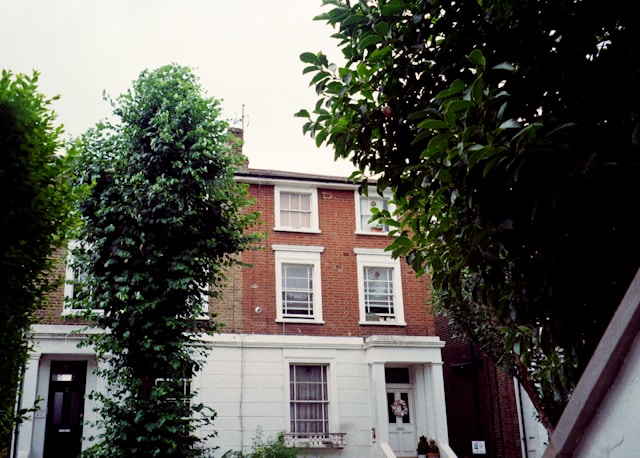
A freshly renovated house can be very convincing.
New kitchen, new flooring, spotless paintwork, modern bathroom and perhaps even new windows and doors. When everything looks clean and recently finished, spending more money on a property survey can feel unnecessary.
After all, what could possibly be wrong with a house that has just had thousands of pounds spent on it?
Quite a lot, potentially.
That does not mean renovated properties should be treated with suspicion. Many renovations are carried out properly and genuinely improve the condition of a house. The problem is that new finishes can tell you very little about what is happening behind them.
A freshly plastered wall can hide an old damp problem just as easily as it can represent good-quality refurbishment. A new kitchen can be installed in a house with an ageing roof. New flooring can cover uneven or damaged floorboards.
This is why the condition of the decoration and the condition of the building need to be looked at separately.
One of the easiest traps for buyers is allowing presentation to influence their judgement of the property as a whole.
You walk into an older house that has not been decorated for twenty years and immediately start noticing everything that needs doing. The carpets are worn, the paint is faded and the kitchen looks dated.
Walk into the same type of house after renovation and your attention goes in the opposite direction. Everything looks finished. You start thinking about where the sofa will go rather than wondering when the roof was last replaced.
The second house may be in better condition.
But it is not guaranteed.
A survey is useful because the surveyor is not really interested in whether the kitchen worktop looks fashionable. They are looking at the building.
They will consider things such as the roof, walls, windows, drainage, signs of movement, moisture, ventilation and the condition of accessible structural elements.
That becomes particularly important with quick renovations.
Anyone who follows the housing market will have seen properties that are bought, refurbished and returned to the market relatively quickly. There is nothing automatically wrong with this. Some developers carry out excellent work.
Others concentrate heavily on what buyers can see.
Painting walls, changing kitchens, fitting laminate flooring and replacing bathroom fittings can dramatically improve photographs on an estate agent listing.
Fixing a leaking roof or sorting out defective drainage is far less visible.
Neither job creates the same instant impression during a viewing.
Imagine an older terraced property that has been fully redecorated before sale.
Upstairs, the ceilings have been freshly painted. What you do not know is that there was water staining in one bedroom before the decorating started.
Perhaps the leak was repaired properly.
Perhaps the ceiling was simply painted.
You cannot reasonably tell from looking at the finished room.
A surveyor may notice something else that gives the issue away. There could be defects to the roof covering, damaged flashing around a chimney or signs of moisture in the roof space.
That is why an inspection is still worth considering even if the inside looks almost new.
The same applies to damp.
Fresh plaster and paint can make a previously affected wall look perfectly normal for a while.
Again, this does not mean somebody is deliberately hiding a problem. Renovation work often involves replastering simply because the old finish is poor.
But if the original cause of the moisture has not been dealt with, the problem can eventually return.
The source could be something surprisingly simple such as overflowing guttering or a leaking external pipe.
It could also be connected to high external ground levels, failed pointing, poor ventilation or another defect that needs further investigation.
A surveyor cannot see through walls, but the wider inspection can reveal clues that are easily missed during an ordinary viewing.
Extensions are another area worth paying attention to.
A house advertised as “fully renovated” may also have had substantial building work carried out.
Perhaps the kitchen has been opened into the dining room. Maybe there is a rear extension or converted loft.
This can add real value and make the property much more useful.
But structural changes deserve more attention than new decoration.
Opening two rooms into one may involve removing a load-bearing wall and installing a supporting beam.
A loft conversion changes the use and sometimes the structure of the roof space.
An extension introduces new foundations, walls, roof junctions and drainage arrangements.
None of that is visible when you are standing in a newly painted room.
This is one reason buyers of heavily altered properties often consider a more detailed Building Survey.
The surveyor can inspect the visible condition of the work, while your solicitor can separately investigate the legal paperwork and approvals connected with alterations.
Those two checks should not be confused.
A building regulation certificate does not mean a property will never develop a defect, just as a survey cannot confirm whether every piece of paperwork is present.
Both have their own purpose.
Bathrooms are another good example of why appearance can be misleading.
A newly installed bathroom may look excellent on the day of the viewing.
The more important questions are sometimes much less glamorous.
Is the room properly ventilated?
Is water escaping around the shower or bath?
Has the floor been adequately prepared for the new finish?
Are there signs of leaks below?
These are the kinds of issues that can turn what looks like a minor fitting problem into damaged floors or ceilings later on.
The same applies to windows.
New windows are usually a positive feature, but installation quality still matters.
Poor sealing around frames can lead to water penetration or draughts. In some properties, replacing older windows with much more airtight units can also change ventilation patterns.
That is particularly relevant if the house already has a tendency towards condensation.
Older properties deserve a little more caution generally.
A Victorian terrace can be renovated beautifully without changing the fact that it is a Victorian terrace.
It may still have solid walls, an ageing roof structure, older drains, chimney breasts and timber floors.
These are not faults. They are simply part of the building.
However, they can require a different approach to maintenance than a recently constructed house.
In fact, some renovation choices can occasionally create problems in older buildings.
Traditional solid walls were designed to manage moisture differently from modern cavity construction. Using unsuitable hard renders or non-breathable finishes can sometimes contribute to damp appearing elsewhere.
A house can therefore look extremely modern inside while the building itself is still behaving like the hundred-year-old structure it is.
Does every refurbished property need the most detailed survey available?
No.
If you are buying a relatively modern house that has simply had a new kitchen, bathroom and decorative update, a Level 2 HomeBuyer Survey may be entirely reasonable.
You can compare surveyors providing HomeBuyer Surveys through Surveys Near Me.
The decision changes when the property is older, heavily altered or has clearly undergone substantial building work rather than simple redecoration.
If somebody has changed the layout, extended the property, converted the loft and completely refurbished an older house, it is worth asking whether a Level 3 Building Survey would give you more useful information.
A conversation with the surveyor before booking can often settle this.
Describe the property.
Tell them roughly how old it is, what appears to have been changed and whether the estate agent has mentioned recent refurbishment.
A good surveyor should be able to recommend an appropriate inspection rather than automatically suggesting the most expensive option.
It is also sensible to ask the seller questions about the work.
- When was it carried out?
- Who completed it?
- Was the roof replaced or merely repaired?
- Was the property rewired?
- Was a new heating system installed?
- What structural changes were made?
- Are there guarantees for any major work?
Your solicitor can then request relevant documents where necessary.
Do not be afraid of a renovated property. Most buyers would naturally prefer a house where somebody else has already dealt with the decorating, dated bathroom and tired kitchen.
Just do not assume that renovation removes the need to understand the underlying building.
The value of a survey is often greatest when it identifies something you did not notice yourself.
If the report comes back with only ordinary maintenance recommendations, that is good news.
If it finds a defect hidden behind all that fresh decoration, you have found out while you can still decide what to do about it.
That is much better than discovering it six months after moving in.
If you are comparing properties at the moment, you can find local surveyors by area and the type of survey you need. Surveys Near Me also explains how the comparison process works if you want to contact more than one surveyor before choosing.